© 2026 Pediatric Rheumatology Care. All Rights Reserved.
Powered By VCOGS DIGITAL MEDIA


Genetics is increasingly contributing to our understanding of immune, inflammatory, and musculoskeletal disorders. It can help identify the basis of previously unexplained conditions and, in some disorders, contribute to more precise approaches to diagnosis and treatment.
Advances in genetic testing have made genetic information increasingly accessible, but interpreting the findings can be complex. Genetic variation is a normal part of human biology, and finding a genetic variant does not necessarily mean that it causes disease. Its significance depends on the evidence for the specific variant and how well it fits the individual's clinical presentation.
Dr. Pallavi Pimpale spent five years at the National Institutes of Health (NIH), Bethesda, USA, focusing on autoinflammatory diseases, genetic and molecular diagnosis, laboratory evaluation, and gene discovery. This provides the foundation for a genetics-informed clinical approach—integrating clinical phenotypes with genetic findings, family history, and evolving scientific evidence.

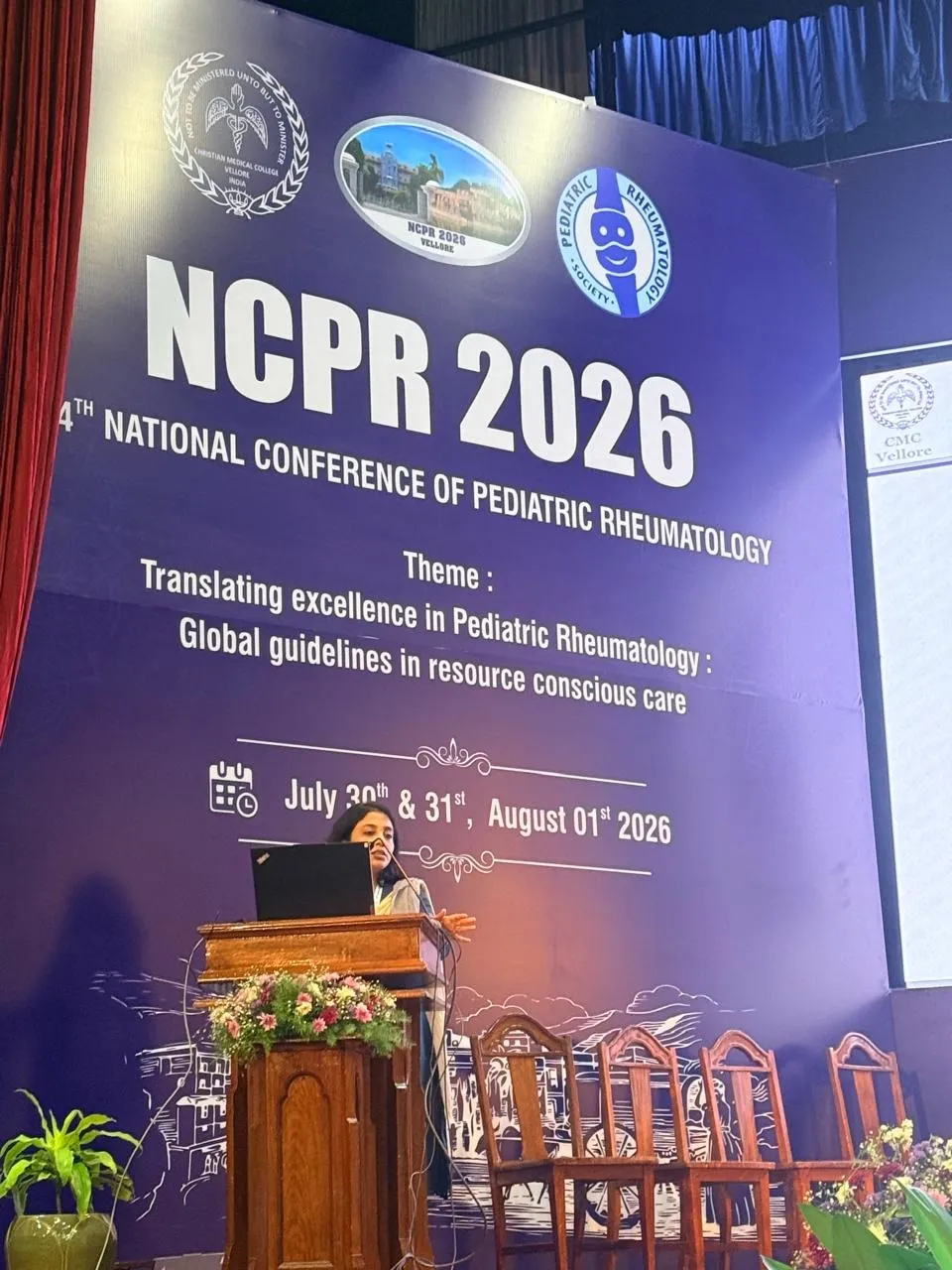
A particular focus is the clinical interpretation of Variants of Uncertain Significance (VUS). As genetic knowledge continues to evolve, new evidence may change our understanding of individual variants and gene–disease relationships. For selected cases, periodic review of previously uncertain findings may provide additional insight over time.
Evaluation may be considered in selected immune, inflammatory, or musculoskeletal disorders, particularly with:
To bridge the gap between a genetic report and its clinical meaning—assessing the evidence for a genetic finding, determining whether it helps explain the underlying disease process, and, where relevant, guiding further evaluation or treatment decisions.
In-depth clinical interpretation of existing genetic reports, with a particular focus on VUS, genotype–phenotype correlation, supporting evidence, and reanalysis as genetic knowledge evolves.
Further evaluation for selected complex or unresolved cases, including deeper genetic analysis, specialized studies, and collaboration with expert laboratories or centers where appropriate.